

Section 80QQB: Deduction for Authors of Books
- PRITI SIRDESHMUKH

- Oct 14, 2025
- 9 min read
Section 80QQB of the Income Tax Act allows Indian authors to claim a tax deduction on income earned from royalties or copyright fees for certain types of books. This deduction reduces the taxable income of authors, supporting literary, artistic, or scientific work. Only individual authors earning royalties in India can claim it, and the deduction is capped at Rs. 3,00,000 or the actual royalty received, whichever is lower. To qualify, authors must adhere to specific eligibility criteria, avoid excluded book types, and follow filing procedures under the old tax regime. Understanding these rules ensures authors optimize their tax benefits efficiently.
Section 80QQB provides a tax deduction for resident individual authors who earn income from royalties or lump sum copyright payments for literary, artistic, or scientific books. Eligible authors can reduce their taxable income up to Rs. 3,00,000 or the total royalty received, ensuring proper tax planning. Payments must be earned in India or brought into India in INR if earned abroad, and authors must obtain Form 10CCD from the royalty payer while filing under the old tax regime. Non-refundable advances and copyright assignments are also covered, making this deduction a vital tool for authors to minimize tax liability while encouraging creative work.
Table of Contents
What is Section 80QQB Deduction?
Section 80QQB allows a deduction from gross total income for royalties received by authors of certain books. The deduction is available for income earned from books authored in India, written in any language, and published by recognized publishers. This incentive is meant to support authors by reducing the tax burden on royalty income, making literary work financially viable.
Who Qualifies for Section 80QQB?
To qualify, the individual must be an author of a book published in India. The author can be a resident individual, and the book should not be a textbook for school or college use (unless specifically mentioned under exceptions). Freelance authors, independent writers, and authors under publishing contracts may claim this deduction provided they meet the documentation and reporting requirements.
Types of Books Eligible for Deduction
Eligible books under Section 80QQB include:
Fiction and non-fiction works.
Scholarly or literary publications.
Books written in any language and published in India.
Royalties received from the publication of the book.
This ensures that both creative and academic contributions are recognized for tax relief purposes.
Excluded Books Under Section 80QQB
Certain types of books are specifically excluded from claiming the deduction under Section 80QQB of the Income Tax Act. Firstly, textbooks that are primarily intended for school or college use are not eligible for this deduction. These books are generally considered educational material for students rather than literary work that generates royalty income for the author.
Secondly, books authored for commercial purposes that are unrelated to literature or creative writing also do not qualify. For example, manuals, technical guides, or promotional content written purely for commercial gain fall outside the scope of Section 80QQB. The intention behind this exclusion is to ensure that only literary works earning royalty income are incentivized, rather than publications created for business or marketing purposes.
Thirdly, works that do not generate royalty income are automatically ineligible. This means that if the book is sold outright without any recurring royalty payments or is distributed free of charge, the author cannot claim the deduction.
Authors must carefully verify the eligibility of their books before claiming the Section 80QQB deduction. Claiming deductions for ineligible books may attract scrutiny from tax authorities, lead to adjustments during assessment, or result in penalties for incorrect claims. Therefore, maintaining proper documentation, such as royalty agreements and proof of literary authorship, is essential to ensure compliance and secure the benefit under Section 80QQB.
How to Claim Section 80QQB Deduction
Authors who earn royalty income from the publication of their books are eligible to claim a deduction under Section 80QQB of the Income Tax Act. To claim this deduction correctly while filing an Income Tax Return (ITR), the first step is to collect all royalty statements from publishers. These statements should clearly indicate the amount of royalty received during the financial year.
Next, it is essential to verify that the income qualifies under Section 80QQB. The deduction is applicable only for royalties earned from books authored by the taxpayer, and the books must be published in India. Any income from books written in collaboration or those that do not fall under the specified category may not be eligible.
Once the income is verified, it should be reported under the appropriate head in the ITR form, typically “Income from Other Sources” or the specific section prescribed in the selected ITR form. During the calculation of taxable income, the author can then claim the deduction under Section 80QQB, reducing the overall tax liability.
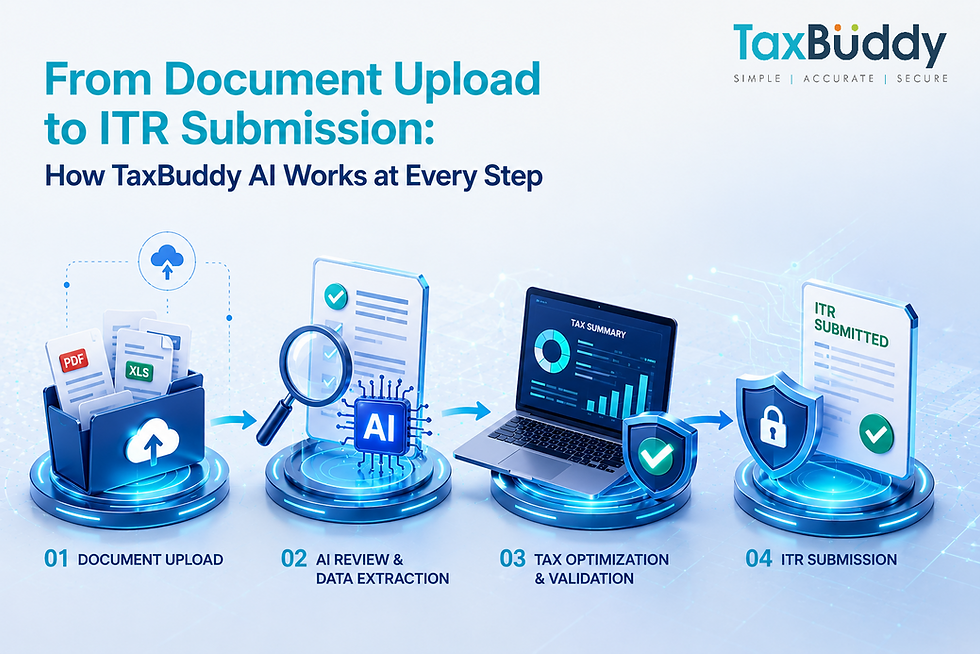
Using reliable platforms like TaxBuddy can simplify this process significantly. TaxBuddy guides authors through each step, ensuring that royalty income is reported accurately, all supporting documents are considered, and the Section 80QQB deduction is claimed in compliance with the latest tax regulations. This not only minimizes errors but also ensures timely filing and maximizes eligible tax benefits.
Deduction Limit and Calculation
The maximum deduction under Section 80QQB is ₹3,00,000 or the actual royalty income received, whichever is lower. Authors must calculate their deduction carefully to ensure it does not exceed this limit. For example, if an author earns ₹2,50,000 in royalties, the full amount can be claimed as a deduction. If the royalty income is ₹4,00,000, only ₹3,00,000 is allowed as the deductible amount.
Filing Requirements and Form 10CCD
To claim Section 80QQB deduction, authors must submit Form 10CCD along with their ITR. This form captures details of the royalty income, the publisher, and the book title. Filing this form ensures transparency and allows the Income Tax Department to verify the claim efficiently.
Is Section 80QQB Allowed in the New Tax Regime?
No, Section 80QQB deduction is not allowed under the New Tax Regime. It can only be claimed under the Old Tax Regime, which permits various deductions and exemptions. Authors opting for the New Tax Regime must forgo this benefit in exchange for lower tax rates.
Practical Example of Section 80QQB Deduction
Suppose an author earns ₹2,80,000 as royalties from a novel published in India. While filing ITR under the Old Tax Regime, the author can claim ₹2,80,000 as a deduction under Section 80QQB, reducing taxable income by the same amount. Using TaxBuddy, authors can easily input royalty details, calculate the deduction, and file the return without errors.
Common Mistakes Authors Must Avoid
Authors often make mistakes when claiming deductions on their royalty income, which can lead to unnecessary scrutiny, notices, or even penalties from the Income Tax Department. One common error is claiming royalties from books that do not qualify for the deduction. Only royalties received from books of literary, artistic, or scientific nature are eligible under Section 80QQB, and claiming from ineligible publications can lead to disallowance.
Another frequent mistake is exceeding the maximum deduction limit of ₹3,00,000. Even if an author earns higher royalties, the law caps the deduction, and attempting to claim beyond this limit may trigger tax notices.
Failure to submit Form 10CCD is also a critical oversight. This form is required to officially claim the deduction, and missing it can result in the claim being disallowed or delayed.
Some authors mistakenly file under the New Tax Regime while claiming this deduction, which is not allowed, as Section 80QQB benefits are only applicable under the Old Tax Regime.
Additionally, not maintaining proper royalty statements or records from publishers can create issues during assessment. Accurate documentation of income and deductions ensures smooth processing and compliance.
Correct filing, adhering to all conditions, ensures authors can maximize their eligible benefits while avoiding delays or unnecessary notices from the Income Tax Department.
How TaxBuddy Simplifies Claiming Section 80QQB
TaxBuddy offers a seamless process for claiming Section 80QQB deductions. The platform guides authors through entering royalty income, verifying book eligibility, calculating the correct deduction, and filing the ITR under the Old Tax Regime. With TaxBuddy, authors can avoid manual errors, maintain proper documentation, and ensure accurate compliance, resulting in a hassle-free tax filing experience.
Conclusion
Section 80QQB serves as a valuable incentive for authors, allowing them to reduce their taxable income by claiming deductions on royalty earnings from published books. By understanding eligibility criteria, required documentation, and the maximum limit, authors can effectively plan their taxes and benefit from this provision. For anyone looking for assistance in filing ITR and claiming deductions like Section 80QQB, it is highly recommended to download the TaxBuddy mobile appfor a simplified, secure, and hassle-free experience.
FAQs
Q1. Who is eligible to claim Section 80QQB deduction?
Section 80QQB is specifically designed for resident individual authors in India. To be eligible, the individual must have written and published a book during the relevant financial year. Only the royalties earned from such published works are considered for this deduction. Authors earning income from other sources, such as employment or business, can also claim this deduction on royalty income, provided they meet the criteria.
Q2. What is the maximum deduction under Section 80QQB?
The maximum deduction allowed under Section 80QQB is ₹3,00,000 per financial year. If the royalty income earned from a published book is less than this limit, the actual royalty income can be claimed as a deduction. This limit ensures that high-earning authors can benefit while maintaining a cap to regulate deductions under the Income Tax Act.
Q3. Can co-authors claim the deduction?
Yes, co-authors are eligible to claim Section 80QQB deductions. The deduction is proportionate to each author’s share of royalty income. For example, if two authors share royalties equally, each can claim a deduction up to ₹1,50,000 per year, subject to the maximum limit of ₹3,00,000 for the individual. Proper documentation of royalty distribution is required to support the claim.
Q4. Is the deduction available under the new tax regime?
No, Section 80QQB deductions are available only under the old tax regime. The new tax regime, which offers lower tax rates but fewer exemptions and deductions, does not allow claims under this section. Authors choosing the new regime will not be able to reduce taxable income using 80QQB.
Q5. What documents are required to claim the deduction?
To claim the Section 80QQB deduction, authors need to submit supporting documents such as:
Royalty statements or receipts from the publisher
Proof of book publication (ISBN, publication certificate, or publisher declaration)
PAN details of the author and co-authors (if applicable) These documents verify eligibility and ensure accurate deduction claims during ITR filing.
Q6. Does the deduction apply to e-books or only printed books?
Section 80QQB applies to both printed books and e-books, provided royalties are earned from the sale of the published work. The type of medium—digital or physical—does not restrict eligibility. What matters is that the book is published, sold, and royalties are received in India.
Q7. Can foreign royalties be claimed under this deduction?
No, the deduction under Section 80QQB applies only to royalties earned from books published and sold in India. Royalties received from foreign publications or sales outside India are not eligible. Authors earning international royalties must report this as taxable income but cannot claim 80QQB deductions for such income.
Q8. Does the deduction reduce taxable income or tax payable directly?
The Section 80QQB deduction reduces taxable income, not tax payable directly. By lowering taxable income, the overall tax liability decreases according to the applicable slab rates under the old tax regime. For example, if an author earns ₹2,50,000 as royalty income, claiming this deduction reduces taxable income by the same amount, lowering the effective tax payable.
Q9. Can the deduction be claimed multiple times for the same book?
Yes, the deduction can be claimed every financial year for royalties earned from the same book, up to the maximum limit of ₹3,00,000 per year. This ensures authors who earn recurring royalty income from popular works can benefit annually.
Q10. Is there any age limit for claiming Section 80QQB?
No, there is no age restriction to claim Section 80QQB. Any resident individual who is an author and earns royalties from a published book, regardless of age, is eligible to claim this deduction under the old tax regime.
Q11. Are there restrictions on the type of book eligible?
Yes, the book must be original and fall under literary, artistic, educational, or scientific categories. Self-published books are also eligible, provided royalties are received. Plagiarized works or non-royalty-based publications are not eligible for the deduction.
Q12. Can authors use TaxBuddy for claiming Section 80QQB deductions?
Yes, authors can use TaxBuddy to claim Section 80QQB deductions efficiently. TaxBuddy’s platform simplifies ITR filing, ensures accurate entry of royalty income, calculates eligible deductions, and provides expert-assisted guidance to maximize tax benefits. The platform is secure and user-friendly, making it ideal for authors filing under the old tax regime.




Comments