

Section 80GGC: Deduction for Political Contributions
- PRITI SIRDESHMUKH

- Oct 14, 2025
- 9 min read
Section 80GGC of the Income Tax Act, 1961, provides taxpayers with a 100% deduction on contributions made to registered political parties and recognized electoral trusts. This deduction applies only to non-cash donations via cheque, demand draft, or electronic transfer, promoting transparency in political funding. Taxpayers can claim the deduction without any upper limit, subject to their total taxable income. Recent compliance updates emphasize proper documentation and timely tax filing to avoid penalties. Understanding Section 80GGC helps individuals, HUFs, and firms optimize tax savings while supporting political entities through legitimate, traceable contributions.
Table of Contents
What is Section 80GGC?
Section 80GGC allows taxpayers to claim a deduction for contributions made to political parties registered under the Representation of People Act, 1951, or electoral trusts approved by the Income Tax Department. The deduction reduces the taxable income in the year the contribution is made. This section is particularly relevant for individual and corporate taxpayers seeking to support political entities while gaining tax benefits. Contributions must be made in ways permitted by the Act to qualify, ensuring transparency and traceability of funds.
Who Can Claim Deduction Under Section 80GGC?
Both individuals and Hindu Undivided Families (HUFs) are eligible to claim deductions under Section 80GGC. Companies and other entities can also claim the deduction if they make contributions within the legal framework. Salaried employees, professionals, and business owners who donate to eligible political parties or electoral trusts can reduce their taxable income by the exact amount contributed. Contributions made by cash are not allowed; only digital or cheque payments are considered valid.
Eligible Political Parties and Electoral Trusts
To qualify for deductions under Section 80GGC, contributions must be made to:
Political parties registered under Section 29A of the Representation of People Act, 1951.
Electoral trusts that have been approved by the CBDT.
It is important to verify the eligibility of the political party or trust before making the donation. Donations to unregistered parties, unapproved trusts, or anonymous contributions do not qualify for the deduction.
Modes of Contribution to Qualify for 80GGC Deduction
Contributions must be made through non-cash modes, including:
Online banking transfers (NEFT/RTGS/UPI)
Cheques or demand drafts
Digital payment gateways approved by the party or trust
Cash donations are explicitly excluded under Section 80GGC. Taxpayers should retain receipts and official acknowledgment from the recipient political party or electoral trust to support their claim during filing.
Deduction Amount and Limitations
Section 80GGC of the Income Tax Act is designed to incentivize donations made to political parties or electoral trusts by allowing taxpayers to claim a deduction for the full amount contributed. Under this section, taxpayers can deduct 100% of the contribution from their total income, which effectively reduces their taxable income by the exact amount donated. Unlike other sections that provide deductions for charitable donations, Section 80GGC does not impose any upper monetary limit, meaning that the entire contribution, regardless of its size, is eligible for deduction.
However, certain conditions must be met for the deduction to be valid. The contribution should be made to eligible entities, such as registered political parties or electoral trusts recognized under the relevant provisions of the Income Tax Act. Taxpayers must ensure that the contributions are properly documented, with receipts or proof of payment maintained for verification purposes. In the case of corporate contributions, the Act specifies that donations must be made via approved non-cash channels, such as bank transfers, cheques, or online payment methods. Cash donations are explicitly excluded, ensuring transparency and traceability of funds.
This provision encourages formal contributions while promoting compliance and accountability, allowing taxpayers to support political entities without facing restrictions on the deduction amount.
Is Section 80GGC Allowed in the New Tax Regime?
Under the new tax regime, Section 80GGC deductions are not allowed, as most exemptions and deductions are removed. Taxpayers who want to claim this deduction must opt for the old tax regime, where deductions like 80GGC, 80C, HRA, and others are still available.
How to Claim Section 80GGC Deduction in Old Tax Regime
To claim a deduction under Section 80GGC in the old tax regime, it is essential to follow a systematic approach to ensure compliance and avoid any issues during scrutiny. The first step is to verify that the recipient of your contribution is eligible for the deduction. Only donations made to recognized political parties or electoral trusts qualify under Section 80GGC. It is important to confirm that the political party or trust you are contributing to is registered with the Election Commission of India and is eligible under the provisions of this section.
Next, ensure that your contribution is made through a permitted non-cash mode, such as a cheque, bank draft, online transfer, or digital payment. Cash donations are explicitly excluded under Section 80GGC, so using digital or banking channels is mandatory.
After making the donation, collect and retain all receipts or acknowledgments provided by the political party or electoral trust. These documents are crucial for supporting your claim and may be required if the Income Tax Department requests verification during assessment.
While filing your ITR under the old tax regime, declare the contribution under Section 80GGC in the designated field of the return form. Accurate entry is essential to ensure that the deduction is applied correctly and reflected in your tax computation.
Maintaining proper documentation is equally important. Ensure that all receipts, acknowledgment numbers, and transaction details are kept securely so that they can be presented during any future scrutiny or audit. Failure to provide valid documentation can lead to the disallowance of the deduction.
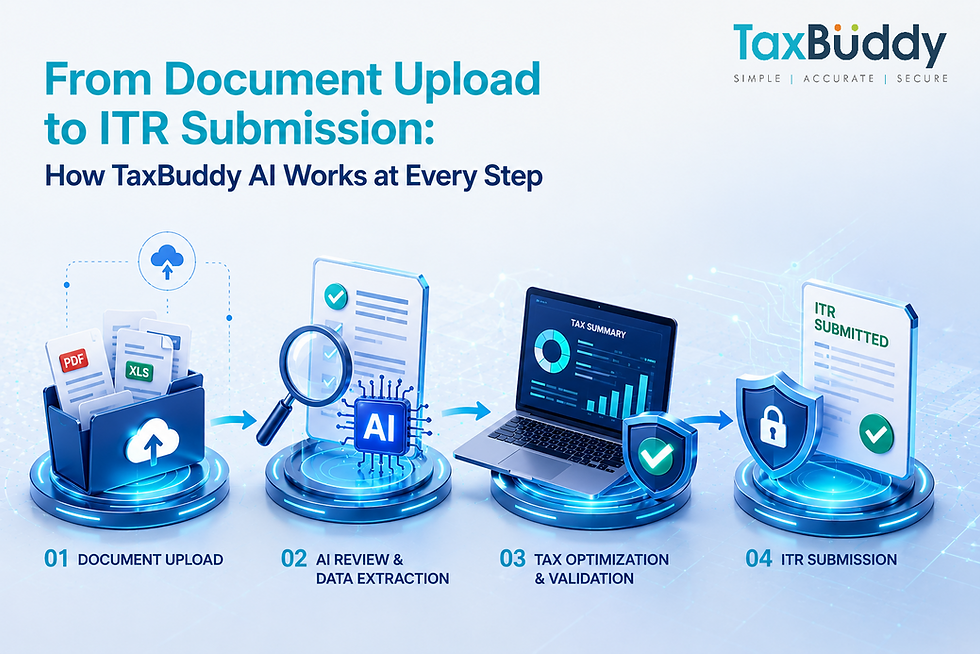
Using platforms like TaxBuddy can simplify the entire process. TaxBuddy assists taxpayers by automatically identifying eligible contributions, validating the receipts, and accurately reflecting the deduction in the ITR filing. This reduces the risk of errors, saves time, and ensures that taxpayers claim the maximum benefit under Section 80GGC in the old tax regime.
Recent Compliance Updates and Filing Requirements
The Income Tax Department has emphasized:
Electronic acknowledgment of donations is mandatory for claiming Section 80GGC deductions.
Only contributions made during the financial year for which the ITR is filed are eligible.
Donations must be traceable and made via approved channels.
Taxpayers should update their records and ensure proper documentation to avoid discrepancies or rejection during ITR verification.
Common Mistakes to Avoid While Claiming 80GGC
When claiming deductions under Section 80GGC for political contributions, taxpayers often make errors that can lead to the rejection of the claim or unnecessary scrutiny. One common mistake is claiming donations made in cash. Section 80GGC requires that contributions be made through a valid digital payment method, cheque, or demand draft to ensure transparency and traceability. Cash donations are not eligible for deductions and can trigger queries from the Income Tax Department.
Another frequent error is donating to unregistered political parties or electoral trusts that have not been approved under the Income Tax Act. Only donations made to registered political parties or specified electoral trusts qualify for deductions, and contributions to unapproved entities are strictly disallowed.
Failing to retain receipts or official acknowledgments is another critical oversight. Taxpayers must preserve proof of donation, including receipts issued by the political party or electoral trust, as these documents are necessary to substantiate the claim during verification or audit.
Some taxpayers mistakenly assume that deductions under 80GGC apply in the new tax regime. However, the new regime does not allow this deduction, so filing under it expecting benefits can lead to errors or adjustments.
Finally, entering incorrect amounts in the ITR forms, either due to typographical mistakes or miscalculations, is a common problem. Even small discrepancies can delay processing or attract notices. Ensuring accurate entry of donation amounts, PAN details of the recipient party, and mode of payment can prevent errors and smoothen the filing process.
By avoiding these mistakes, taxpayers can ensure that their 80GGC claims are correctly processed, reduce the risk of notices or queries, and maintain compliance with the Income Tax Department’s requirements.
Role of TaxBuddy in Simplifying 80GGC Claims
TaxBuddy offers an easy-to-use platform for filing ITR while accurately claiming Section 80GGC deductions. Key benefits include:
Automated verification of eligible political parties and electoral trusts.
Guidance on permissible modes of contribution.
Ensuring correct entry of donation details in the ITR form.
Assistance with documentation to support claims in case of scrutiny.
Option for self-filing or expert-assisted filing for seamless compliance.
This simplifies the process for taxpayers, minimizes errors, and ensures maximum benefit under Section 80GGC.
Conclusion
Section 80GGC provides a significant opportunity for taxpayers to support political parties or electoral trusts while reducing taxable income. Accurate contributions, proper documentation, and filing under the old tax regime are essential for claiming this deduction successfully. For anyone looking for assistance in claiming Section 80GGC deductions and filing their ITR correctly, it is highly recommended to download the TaxBuddy mobile app for a simplified, secure, and hassle-free experience.
FAQs
Q1. Does TaxBuddy offer both self-filing and expert-assisted plans for claiming 80GGC deductions?
Yes. TaxBuddy provides both self-filing and expert-assisted plans for claiming deductions under Section 80GGC. With the self-filing plan, taxpayers can upload donation details, and the platform guides them step by step to ensure accurate entry of 80GGC contributions. The expert-assisted plan allows a professional to review donation receipts, verify eligibility, and file your ITR on your behalf, reducing the risk of errors and maximizing your deductions.
Q2. Can I claim Section 80GGC deduction under the new tax regime?
Yes, Section 80GGC deductions are available under both the old and new tax regimes. Any contribution to a registered political party or electoral trust qualifies, provided it is made via non-cash modes, such as cheque, bank transfer, or online payment. Cash donations are not eligible under this section.
Q3. What modes of contribution are eligible for 80GGC deduction?
Eligible contributions include payments made through cheque, bank draft, online transfer, NEFT, RTGS, or UPI. Cash donations are explicitly excluded to maintain transparency and traceability of political contributions. TaxBuddy ensures that only valid contributions are considered when calculating the deduction.
Q4. Are donations in cash allowed for 80GGC deduction?
No. Cash donations are not eligible for deduction under Section 80GGC. The Income Tax Act mandates non-cash payment methods to maintain transparency in political funding. TaxBuddy automatically flags any cash contributions during the filing process to avoid incorrect claims.
Q5. How can I verify if a political party or electoral trust is eligible for 80GGC?
Eligibility requires the party or trust to be registered under the Representation of the People Act, 1951, or recognized as an electoral trust under the Income Tax Act. TaxBuddy maintains an updated list of eligible parties and trusts and guides users to select the correct entity for claiming deductions, ensuring compliance.
Q6. Is there an upper limit on the amount of deduction under Section 80GGC?
No. Section 80GGC does not impose an upper limit on the amount of eligible contribution. Taxpayers can claim the full amount donated to eligible political parties or electoral trusts in their ITR. TaxBuddy accurately computes the deduction and reflects it in the relevant section of the ITR.
Q7. Can corporate donations qualify under Section 80GGC?
No. Section 80GGC is specifically for individuals and Hindu Undivided Families (HUFs). Corporate entities cannot claim deductions under this section; they may be eligible under other provisions, such as CSR (Corporate Social Responsibility) deductions. TaxBuddy ensures corporate users are directed to the correct provisions.
Q8. How do I report 80GGC contributions in the ITR form?
80GGC contributions are reported in the “Deductions under Chapter VI-A” section of the ITR. TaxBuddy simplifies this process by auto-filling details based on uploaded donation receipts, verifying non-cash contributions, and ensuring the amount is correctly entered in the applicable column.
Q9. What documents are required to support a Section 80GGC claim?
To claim 80GGC, you need:
Donation receipts issued by the political party or electoral trust.
Proof of payment through non-cash methods (bank statement, UPI transaction, cheque details). TaxBuddy allows you to upload these documents and automatically cross-verifies them for accurate deduction claims.
Q10. Can I claim 80GGC for contributions made in previous financial years?
No. Only contributions made during the current financial year are eligible for deduction in that year’s ITR. Previous year donations cannot be claimed retroactively. TaxBuddy ensures that only eligible contributions within the correct financial year are considered.
Q11. Does TaxBuddy help in reconciling donation receipts for accurate filing?
Yes. TaxBuddy allows you to upload donation receipts and automatically reconciles them with the declared amount in the ITR. This reduces the risk of errors, mismatches, or missed deductions, making the filing process smooth and compliant.
Q12. What happens if I file an 80GGC deduction incorrectly in ITR?
Incorrect filing may trigger a notice from the Income Tax Department for discrepancies or mismatches. TaxBuddy minimizes this risk by validating donation amounts, payment modes, and entity eligibility. If an error occurs, expert-assisted plans provide guidance to file a rectified or revised return quickly, ensuring your deduction is correctly claimed without penalties.




Comments