

Tax Planning for Individuals With High-Value Transactions
- Rajesh Kumar Kar

- Feb 9
- 9 min read
Tax planning becomes critical when individuals are involved in high-value transactions such as large cash deposits, property purchases, foreign remittances, or significant credit card spending. These transactions are automatically tracked and reported to the tax department through systems like the Annual Information Statement and Form 26AS. Any mismatch between reported income and transaction value can trigger scrutiny or unexplained income notices. Proper planning focuses on accurate reporting, timely tax payments, and legitimate use of deductions to ensure compliance while minimising tax exposure under the Income Tax Act, 1961.
Table of Contents
What Qualifies as High-Value Transactions Under Income Tax Law
High-value transactions refer to financial activities that cross specific monetary thresholds and are considered significant from a tax monitoring perspective. These include large cash deposits, high-value property purchases, substantial investments, luxury spending, and foreign remittances. Under the Income Tax Act, 1961, such transactions are tracked because they may not always align with the income declared in the return.
Common examples include cash deposits exceeding ₹10 lakh in a financial year, purchase or sale of immovable property valued above ₹30 lakh, credit card payments crossing ₹10 lakh annually, and foreign remittances beyond prescribed limits. These thresholds are not meant to restrict spending but to ensure transparency and prevent the circulation of unaccounted income.
How High-Value Transactions Are Reported in AIS and Form 26AS
High-value transactions are reported to the tax department through structured reporting mechanisms by banks, registrars, financial institutions, and intermediaries. This data is consolidated and displayed in the Annual Information Statement and Form 26AS.
AIS provides a comprehensive view of financial activities, including interest income, investments, property transactions, and large payments. Form 26AS primarily focuses on tax-related data such as TDS, TCS, advance tax, and specified financial transactions. Any inconsistency between these statements and the income tax return can trigger automated alerts or compliance notices.
Cash Deposits, Property Purchases, and Credit Card Spends: Reporting Rules
Cash deposits above ₹10 lakh in savings accounts or ₹50 lakh across multiple accounts are mandatorily reported by banks. Fixed deposit investments and recurring deposits also fall under reporting when aggregate limits are crossed.
Property transactions exceeding ₹30 lakh are reported by registrars at the time of registration, including details of buyer, seller, and transaction value. Credit card spends above ₹10 lakh in a financial year, whether domestic or international, are reported by card issuers. These disclosures ensure that lifestyle expenditure remains consistent with declared income levels.
Section 69 and Risk of Unexplained Income Additions
Section 69 of the Income Tax Act empowers tax authorities to treat unexplained investments or expenses as taxable income. When high-value transactions appear in AIS or Form 26AS without corresponding income disclosure or explanation, they may be classified as unexplained.
Such additions attract tax at higher rates along with penalties and interest. Proper disclosure of sources, timely reconciliation of reported data, and maintaining supporting documents significantly reduce the risk of additions under this section.
Tax Planning Strategies for High-Value Transactions
Effective tax planning focuses on aligning large transactions with declared income and legitimate tax-saving avenues. This includes advance planning before executing transactions, choosing the correct tax regime, and spreading income recognition where legally permitted.
Using structured investments, correctly timing capital gains, and ensuring full reporting of exempt and taxable income are essential. Planning does not mean avoiding tax but ensuring compliance without unnecessary tax exposure.
How Section 80C and Other Deductions Help Offset Large Transactions
Deductions under Section 80C allow eligible taxpayers to reduce taxable income by up to ₹1.5 lakh through investments such as ELSS, PPF, NSC, and life insurance premiums. While deductions do not directly reduce the value of high transactions, they help offset overall tax liability arising from income linked to such transactions.
Additional deductions under Sections 80D, 80CCD, and 80E further support tax efficiency, provided they are claimed under the applicable regime and supported by valid documentation.
Is Capital Gains Exemption Allowed in the New Tax Regime?
The new tax regime offers lower slab rates but restricts many exemptions and deductions. Capital gains exemptions related to reinvestment, such as those linked to residential property transactions, are generally not available under the new regime.
Taxpayers engaging in high-value property or asset sales must evaluate whether the new regime results in a higher tax burden when exemptions are foregone. Regime selection should be done before filing, based on transaction profile and income composition.
How Capital Gains Exemptions Work in the Old Tax Regime
Under the old tax regime, capital gains exemptions play a crucial role in tax planning for high-value transactions. Provisions allow exemption of long-term capital gains when proceeds are reinvested in specified assets within prescribed timelines.
These exemptions help reduce or defer tax liability arising from property sales or other capital assets. Accurate calculation, timely reinvestment, and correct reporting are essential to retain the benefit and avoid disputes.
Advance Tax Planning for Individuals With High-Value Deals
Advance tax becomes mandatory when the total tax liability exceeds ₹10,000 in a financial year. High-value transactions often lead to sudden income spikes, making advance tax planning critical.
Tax is required to be paid in instalments across the year, failing which interest is levied. Estimating income from large transactions early and adjusting instalments helps avoid interest under applicable provisions.
TDS, TCS, and Budget Updates Affecting High-Value Transactions
Tax Deducted at Source and Tax Collected at Source apply to several high-value transactions, including property purchases, large goods transactions, and foreign remittances. Recent budget updates have expanded the scope of these provisions to improve reporting accuracy.
Monitoring applicable rates and ensuring credits appear correctly in Form 26AS is essential. Any mismatch should be addressed before filing the return to prevent downstream issues.
Bank Forms, KYC, and Documentation Requirements
Banks and financial institutions require enhanced KYC compliance for high-value transactions. PAN disclosure is mandatory, and in limited cases where PAN is unavailable, Form 60 must be furnished with complete details.
Maintaining documents such as sale deeds, bank statements, investment proofs, and source explanations ensures readiness in case of verification. Proper documentation is often the strongest defence against scrutiny.
How Technology Platforms Simplify High-Value Transaction Compliance
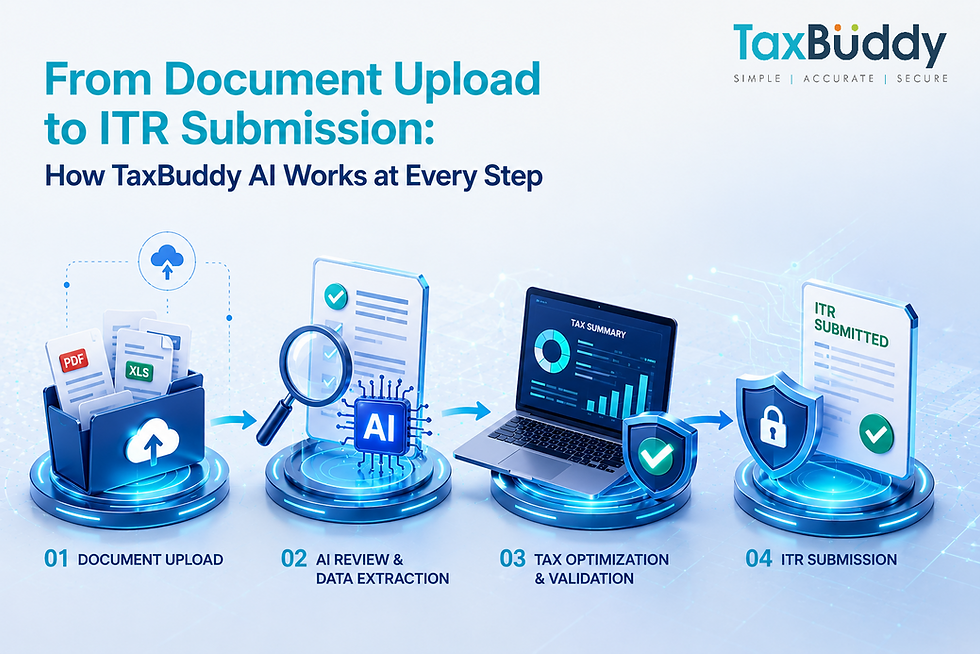
Technology platforms play a critical role in managing tax compliance for individuals involved in high-value transactions by reducing manual effort, improving accuracy, and minimizing the risk of omissions. One of the most significant advantages is the automatic fetching of transaction data from sources such as the Annual Information Statement and Form 26AS. This ensures that bank deposits, property transactions, credit card spends, capital gains, TDS, and TCS entries are visible in one place without relying solely on self-tracked records.
These platforms are designed to flag mismatches early in the filing process. For example, if a large cash deposit, property purchase, or foreign remittance appears in AIS but is not aligned with the income or schedules selected in the return, the system highlights the discrepancy. This allows corrective action before submission, rather than dealing with notices or queries after filing. Early detection is particularly important for high-value transactions, where even small reporting gaps can attract scrutiny.
Another key benefit is regime comparison and eligibility validation. When large capital gains, property transactions, or investment-linked deductions are involved, selecting the appropriate tax regime becomes complex. Technology platforms compare tax liability under both regimes after factoring in exemptions, deductions, and surcharge impact, helping individuals make an informed choice before filing. This avoids situations where opting for a lower-rate regime inadvertently leads to higher tax due to loss of exemptions.
Advance tax computation is also simplified through automation. Platforms estimate advance tax liability by considering income from high-value or one-time transactions and distribute it across applicable instalments. Alerts and summaries help users stay compliant with payment timelines, reducing exposure to interest for shortfall or delay. This is especially useful where income arises unevenly during the year, such as from asset sales or large bonuses.
Documentation management is another area where technology adds value. High-value transactions often require supporting documents such as sale deeds, bank statements, investment proofs, and source explanations. Digital platforms provide structured document vaults where records can be uploaded, categorized, and retained for future reference. This ensures readiness in case of verification or assessment and reduces dependency on scattered paperwork.
Solutions like TaxBuddy combine automation with expert validation to handle complex transaction profiles. Automated checks ensure completeness and consistency, while expert review adds an additional layer of assurance for disclosures involving capital gains, large deposits, or foreign transactions. This integrated approach significantly reduces the risk of errors, mismatches, and post-filing compliance issues while keeping the filing process efficient and structured.
Conclusion
High-value transactions require disciplined tax planning, accurate reporting, and proactive compliance to avoid scrutiny and penalties. Aligning financial activity with disclosed income, choosing the correct tax regime, and maintaining documentation are essential steps in this process. For anyone looking for assistance in tax filing, it is highly recommended to download the TaxBuddy mobile app for a simplified, secure, and hassle-free experience.
FAQs
Q. Does TaxBuddy offer both self-filing and expert-assisted plans for ITR filing, or only expert-assisted options?
TaxBuddy offers both self-filing and expert-assisted ITR filing plans. Self-filing is suitable for individuals with straightforward income and transactions who are comfortable reviewing AIS and disclosures themselves. Expert-assisted plans are designed for cases involving high-value transactions, capital gains, foreign remittances, or potential mismatch risks, where professional review helps ensure accurate reporting and compliance.
Q. Which is the best site to file ITR for individuals with high-value transactions?
The best site to file an ITR in such cases is one that allows detailed review of AIS and Form 26AS, supports accurate reporting of capital gains and disclosures, and flags inconsistencies before submission. Platforms that combine automation with compliance checks are generally more suitable for individuals dealing with large or complex financial transactions.
Q. Where to file an income tax return in India?
An income tax return can be filed on the official Income Tax Department portal or through authorized digital platforms that facilitate return preparation, reconciliation of reported data, and submission. For individuals with high-value transactions, filing through platforms that assist with verification and documentation reduces the risk of post-filing notices.
Q. Do high-value transactions always lead to income tax notices?
High-value transactions do not automatically lead to notices. Notices are usually issued when there is a mismatch between reported transactions and declared income, or when the source of funds is not clearly explained. Proper disclosure, AIS reconciliation, and supporting documentation significantly reduce the likelihood of scrutiny.
Q. Are cash deposits automatically treated as taxable income?
Cash deposits are not treated as income by default. However, if cash deposits reflected in AIS are not supported by disclosed income, savings, withdrawals, or other legitimate sources, tax authorities may treat them as unexplained income. Clear reporting of the source and maintaining evidence is essential.
Q. Is PAN mandatory for large or high-value transactions?
Yes, PAN is mandatory for most high-value transactions, including property purchases, large bank deposits, investments, and credit card payments beyond prescribed limits. PAN enables transaction tracking and reporting. In limited cases where PAN is unavailable, Form 60 may be used, but full disclosure of transaction details is still required.
Q. Does the new tax regime allow deductions for investments related to high-value transactions?
The new tax regime does not allow most investment-based deductions such as those under Section 80C or 80D. Individuals with significant investments or capital gains should carefully evaluate whether opting for the new regime results in higher tax liability due to the loss of exemptions and deductions.
Q. Can capital gains tax be avoided or reduced legally?
Capital gains tax cannot be avoided, but it can be reduced or deferred through lawful exemptions available under the old tax regime, subject to conditions and timelines. Proper planning, reinvestment, and accurate reporting are required to claim such exemptions without attracting scrutiny.
Q. How important is AIS reconciliation before filing the ITR?
AIS reconciliation is critical, especially for individuals with high-value transactions. Any income, expense, or transaction appearing in AIS but missing from the return may trigger automated notices. Reviewing AIS and aligning it with the ITR ensures consistency and reduces compliance risks.
Q. Does advance tax apply to one-time or non-recurring large income?
Yes, advance tax applies if total tax liability exceeds ₹10,000 in a financial year, even if the income arises from a one-time transaction such as a property sale or capital gain. Failure to pay advance tax on time can lead to interest liabilities.
Q. Are foreign remittances tracked by Indian tax authorities?
Foreign remittances above specified limits are tracked and reported under applicable reporting frameworks. Such remittances must be disclosed correctly in the return and relevant schedules to avoid incorrect classification or tax implications.
Q. Can digital tax tools help reduce compliance errors for high-value transactions?
Yes, digital tax tools help by auto-fetching reported transaction data, identifying mismatches, assisting in regime selection, and guiding proper disclosures. These tools are particularly useful for managing complex transaction profiles and reducing the risk of errors or omissions.




Comments