

When One Tax Decision Impacts Refunds, Deductions, and Notices Together, a Call Is Usually Scheduled
- Rajesh Kumar Kar

- Feb 19
- 8 min read
A single tax decision under the Income Tax Act can simultaneously affect refunds, invalidate deductions, and trigger automated notices. Most taxpayers experience this when deduction claims do not align with AIS or Form 26AS data, leading to recomputation during processing. Once inconsistencies impact refund eligibility, the system often flags the return for clarification, resulting in a scheduled call or notice. These situations are increasingly common as return processing is fully automated and cross-verified with banking, investment, and transaction data. Understanding how one decision flows across refunds, deductions, and notices helps prevent avoidable scrutiny and delays.
Table of Contents
How One Tax Decision Creates a Chain Reaction Across Refunds, Deductions, and Notices
Under the income tax system, refunds, deductions, and notices are not evaluated independently. A single decision—such as claiming a deduction, choosing a tax regime, or reporting income—flows through the entire return computation. When a deduction reduces taxable income, it directly affects tax liability. Any change in liability alters refund eligibility or creates a demand. During processing, this recalculated outcome is cross-verified with AIS, Form 26AS, and banking data. If inconsistencies arise at any stage, the system automatically flags the return, often resulting in a notice or a clarification call. This interconnected design is the reason one incorrect or unsupported decision rarely remains isolated.
Common Tax Decisions That Trigger Refund and Notice Issues
Several routine tax decisions commonly trigger this chain reaction. Overstating deductions under sections like 80C, 80D, or HRA without sufficient documentation is a frequent cause. Selecting the old tax regime while omitting mandatory deductions proof, or switching regimes without understanding eligibility, also leads to mismatches. Another major trigger is underreporting interest income, capital gains, or high-value transactions that are already reflected in AIS. Even small errors, such as incorrect reporting of employer TDS or ignoring multiple Form 16 entries, can cascade into refund recalculations and automated scrutiny.
How Refund Calculations Get Affected by Incorrect Deductions
Refunds are issued only when prepaid taxes such as TDS or advance tax exceed the final tax liability. When deductions are incorrectly claimed, the system recomputes taxable income and increases tax liability. This reduces the refund amount or completely eliminates it. In some cases, a previously claimed refund is reversed and converted into a tax demand during processing. Such reversals are commonly communicated through intimation notices, and if the variance is material, clarification is sought through calls or follow-ups. This is why deduction accuracy directly determines whether a refund is processed smoothly or stalled.
Why AIS and Form 26AS Mismatches Lead to Scheduled Calls
AIS and Form 26AS act as the backbone of automated verification. These statements contain income, TDS, interest, dividends, securities transactions, and banking data reported by third parties. When the income tax return does not align with this information, the system flags the discrepancy. If the mismatch impacts deductions or refunds significantly, automated emails, notices, or scheduled calls are initiated to seek clarification. Calls are more likely when the mismatch involves high-value transactions, foreign assets, property purchases, or unexplained cash flows that directly influence tax liability.
Notice Generation Process After Return Processing
Once a return is filed, it is processed by the Centralised Processing Centre through an automated system. Basic checks include arithmetical accuracy, deduction limits, TDS verification, and AIS matching. If differences are detected, an intimation under section 143(1) is issued showing adjustments. If further clarification is required, notices under section 142(1) may follow. In cases where the system identifies linked issues across income, deductions, and refunds, the process may include a scheduled call or assisted interaction before finalising the outcome. Timely responses usually prevent escalation.
Role of Bank Account Validation in Refund Holds
Bank account validation plays a critical role in refund processing. Refunds are issued only to pre-validated, PAN-linked, and KYC-compliant accounts. If bank details in the return do not match Form 26AS records or if the account is inactive, refunds are automatically put on hold. Such holds often trigger communication seeking updated or corrected bank details. In many cases, even when deductions and income are correct, invalid bank information alone can delay refunds and lead to follow-up calls.
Can Revised Returns Stop Notices and Refund Reversals?
Revised returns can resolve many issues if filed within the permitted time limits. Correcting income omissions, removing ineligible deductions, or updating bank details through a revised return often aligns computations with AIS data. However, revised returns do not automatically cancel notices that have already been issued. If the revised return still shows material differences or if processing has reached an advanced stage, follow-up communication may continue. Early revision significantly reduces the likelihood of penalties or prolonged scrutiny.
How TaxBuddy Identifies Linked Refund, Deduction, and Notice Risks Early
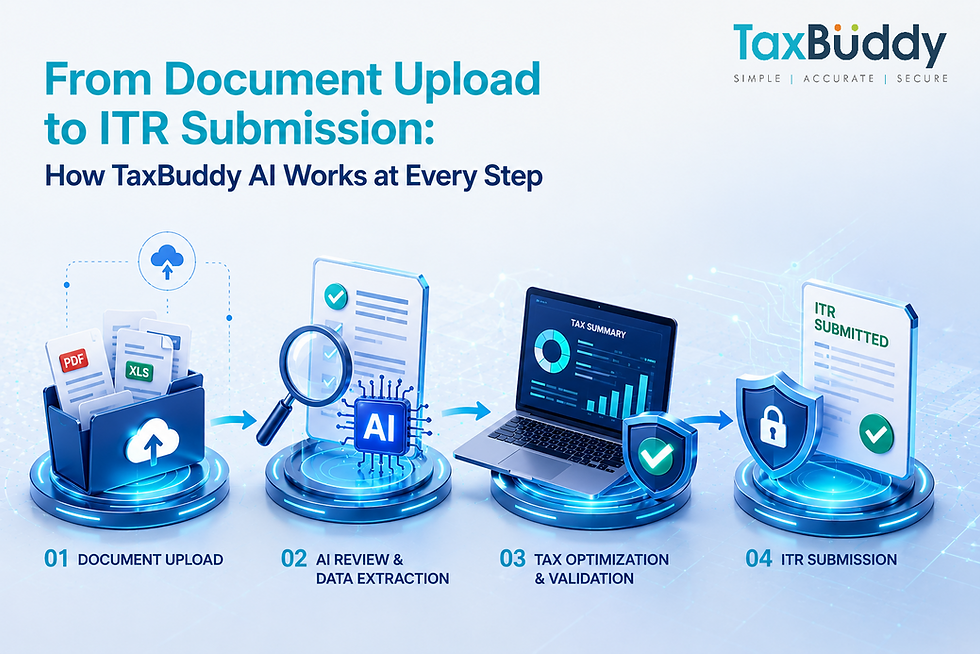
TaxBuddy uses automated checks to identify how one tax input impacts refunds, deductions, and potential notices together. The platform reconciles AIS data with reported income, validates deduction limits, and checks bank account eligibility before submission. Potential risks—such as refund reversals, deduction disallowances, or mismatch-triggered notices—are flagged in advance. Where complexity is high, expert-assisted support helps address issues proactively, reducing the chances of post-filing calls or refund delays.
Practical Steps to Prevent Calls, Notices, and Refund Delays
Preventing post-filing calls, notices, and refund delays largely depends on how accurately the return is prepared before submission. The most important step is to report income exactly as reflected in the Annual Information Statement. This includes salary, bank interest, dividends, capital gains, and any high-value transactions. Even small omissions that appear in AIS but are missing from the return can trigger system-level mismatches and lead to clarification requests.
Deductions should always be claimed strictly within the limits prescribed under the Income Tax Act and only when valid supporting documents are available. Overclaiming deductions or claiming ineligible expenses increases taxable income during processing and directly affects refund eligibility. This is a common reason refunds are reduced or reversed after filing. Reviewing deduction eligibility before selection of the tax regime is equally important, as certain deductions are allowed only under specific regimes.
Selecting the correct tax regime requires a clear understanding of which benefits are available and which are not. Claiming deductions that are not permitted under the chosen regime creates computation inconsistencies that are automatically detected during processing. These inconsistencies often result in adjustment intimations and follow-up communication. Making an informed regime choice at the time of filing avoids unnecessary recomputation later.
Bank account validation is another critical step that is often overlooked. Refunds are released only to accounts that are pre-validated, PAN-linked, and compliant with KYC requirements. Incorrect account numbers, inactive accounts, or mismatches with Form 26AS can place refunds on hold even when the tax calculation is correct. Ensuring bank details are validated before filing significantly reduces refund delays.
Prompt response to intimations or communication from the tax department also plays a key role in preventing escalation. Intimations usually provide an opportunity to agree with adjustments or submit corrections. Ignoring these communications can convert simple discrepancies into formal notices. Where errors are identified, filing a revised return within the allowed time frame helps align the return with reported data and reduces the likelihood of penalties or prolonged scrutiny.
Using platforms that perform pre-filing checks adds an additional layer of protection. Such platforms reconcile AIS data with reported income, verify deduction limits, validate bank details, and highlight how one decision may affect refunds and potential notices. Identifying these interconnected risks before submission leads to smoother processing, faster refunds, and minimal post-filing intervention.
Conclusion
Refunds, deductions, and notices are closely linked outcomes of a single tax computation process. When one decision is incorrect or unsupported, its impact travels across the entire return lifecycle. Early validation, accurate disclosures, and proactive reconciliation are the most effective ways to avoid delays and scrutiny. For anyone looking for assistance in tax filing, a practical option is to download the TaxBuddy mobile app for a simplified, secure, and hassle-free experience.
FAQs
Q1. Why does one small tax mistake affect refunds, deductions, and notices at the same time?
Because income tax processing is fully integrated. A single mistake—such as an incorrect deduction or missed income—changes taxable income, which alters tax liability and refund eligibility. Once liability changes, the system cross-checks the revised figures with AIS, Form 26AS, and bank data. Any mismatch across these layers triggers automated adjustments and, in many cases, a notice or clarification call.
Q2. What types of deductions most commonly trigger refund reversals?
Deductions that are frequently overclaimed or poorly documented cause the most issues. These include Section 80C claims exceeding the ₹1.5 lakh limit, health insurance deductions under Section 80D without valid premium proof, incorrect HRA exemptions, and donation claims under Section 80G without eligible receipts. When disallowed, these directly increase tax payable and reduce or reverse refunds.
Q3. Can a refund already credited be taken back by the tax department?
Yes. If incorrect deductions or income mismatches are identified after initial processing, the refund can be adjusted or recovered through recomputation. In such cases, the refund may be partially reversed or converted into a demand, which is usually communicated through an intimation or follow-up notice.
Q4. Why are AIS mismatches taken more seriously than before?
AIS consolidates third-party financial data such as bank interest, securities transactions, property purchases, foreign income, and high-value spends. Since this data is independently reported, mismatches between AIS and the return indicate potential underreporting. When such mismatches also affect deductions or refunds, the system escalates the case for verification through notices or scheduled calls.
Q5. Does choosing the wrong tax regime increase the chances of notices?
Yes. Claiming deductions that are not permitted under the chosen tax regime—especially claiming old-regime deductions while opting for the new regime—creates computation inconsistencies. These errors are automatically detected during processing and often lead to refund adjustments or notices seeking clarification.
Q6. What is the difference between an intimation and a notice in this context?
An intimation under section 143(1) communicates adjustments made during processing, such as disallowed deductions or refund changes. A notice, such as under section 142(1), seeks additional information or clarification. When issues are interconnected and material, communication may include assisted calls in addition to formal notices.
Q7. How do bank account issues delay refunds even when tax calculations are correct?
Refunds are issued only to pre-validated, PAN-linked, and KYC-compliant bank accounts. If the account is inactive, mismatched, or not validated, the refund is put on hold. This often triggers follow-up communication even when deductions and income disclosures are otherwise accurate.
Q8. Can filing a revised return prevent penalties and further notices?
In most cases, yes—if filed within the permitted time and before escalation. A revised return that correctly aligns income, deductions, and bank details with AIS data usually resolves the issue. However, if discrepancies are significant or repeated, clarification may still be requested even after revision.
Q9. Why are some cases escalated to calls instead of only email notices?
Calls are typically scheduled when multiple issues overlap—such as deduction disallowance, refund reversal, and visible AIS mismatches. Direct interaction helps resolve complex or high-value discrepancies faster than repeated written communication.
Q10. How can early checks reduce the risk of refund holds and notices?
Early reconciliation of AIS with reported income, validation of deduction limits, and bank account verification before filing significantly reduces processing errors. Identifying how one input affects the entire return helps prevent cascading issues during automated scrutiny.
Q11. Does using an assisted filing platform reduce post-filing issues?
Yes. Platforms that perform pre-filing validation, flag interconnected risks, and provide expert review reduce errors that typically trigger notices, calls, or refund delays. Assisted filing is particularly helpful when income sources or deductions are complex.
Q12. Does TaxBuddy support both correction and notice-handling after filing?
Yes. TaxBuddy supports both self-filing and expert-assisted filing, along with post-filing support. It helps identify deduction risks, AIS mismatches, and refund issues and assists with revisions or notice responses when required, reducing stress and compliance gaps.




Comments