

TDS Return Filing Challenges for Startups and Growing Businesses

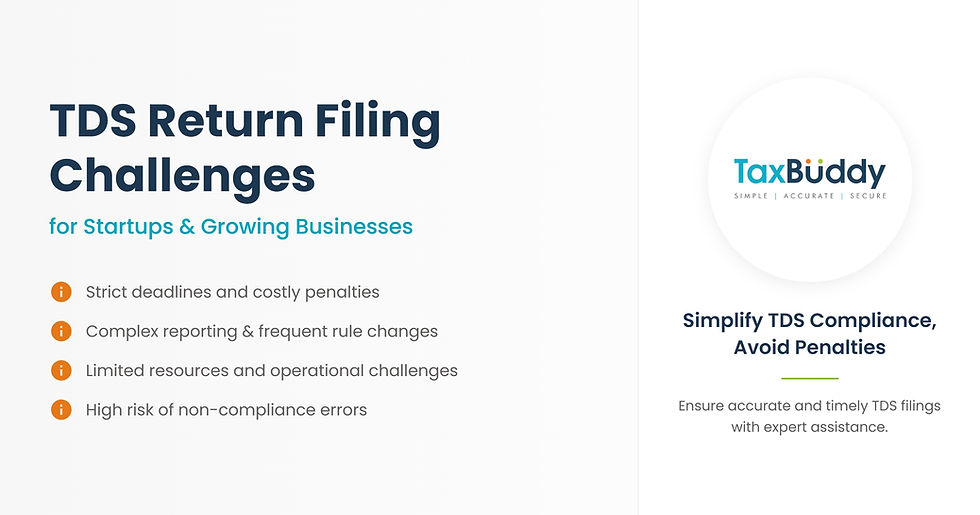
TDS return filing is one of the most compliance-heavy obligations for startups and growing businesses in India. Limited internal resources, frequent regulatory changes, strict deadlines, and complex reporting formats make errors common and costly. Even small lapses can lead to interest, penalties, delayed vendor payments, or issues with bank accounts and funding. As businesses scale, managing TDS accurately across multiple transactions becomes operationally challenging, increasing the risk of non-compliance under the Income Tax Act, 1961.
Table of Contents
Understanding TDS Compliance Requirements for Startups
Tax Deducted at Source (TDS) is a statutory obligation under the Income Tax Act, 1961, requiring businesses to deduct tax while making specified payments such as salaries, professional fees, contractor payments, interest, rent, and commissions. Startups are required to deduct TDS once they cross applicable thresholds or make payments covered under relevant sections like 192, 194C, 194J, or 194A. Compliance does not depend on profitability or business size but on the nature of payments made. Even early-stage startups with limited transactions must comply if TDS provisions apply.
Why TDS Return Filing Is Difficult for Growing Businesses
As businesses scale, transaction volumes increase and payment types diversify. Managing TDS across multiple vendors, consultants, and employees becomes operationally complex. Growing businesses often struggle to track correct deduction rates, maintain deductee details, reconcile challans, and meet quarterly filing deadlines. The absence of structured compliance systems during early growth phases makes TDS return filing one of the first areas where errors surface.
Common TDS Return Filing Challenges Faced by Startups
Startups frequently face challenges such as delayed deductions, incorrect section selection, missed deposits, incomplete challan mapping, and return rejections due to validation errors. Limited finance teams or reliance on manual processes increases dependency on spreadsheets, which often leads to reconciliation mismatches. These issues compound during audits, vendor follow-ups, or bank-related compliance checks.
Incorrect TDS Deduction Rates and Section-Wise Confusion
TDS rates vary depending on the nature of the payment and the applicable section. Startups commonly confuse contractor payments under Section 194C with professional fees under Section 194J, resulting in incorrect deductions. Frequent changes in thresholds and exemptions add to the confusion. Incorrect rates lead to short deduction or excess deduction, both of which trigger compliance issues and vendor dissatisfaction.
Quarterly TDS Return Deadlines and Their Impact on Cash Flow
TDS returns must be filed quarterly within the prescribed due dates. Delays in depositing TDS or filing returns attract interest and late fees, which directly affect working capital. For startups operating on tight budgets, these costs reduce available cash for operations. Additionally, blocked vendor payments due to pending Form 16A issuance can disrupt business relationships.
Penalties, Interest, and Compliance Risks in TDS Filing
Non-compliance with TDS provisions attracts interest on delayed deposits, daily late filing fees, and penalties for inaccurate returns. In serious cases, penalties can be levied even if tax has been paid, but returns are not filed correctly. Persistent non-compliance increases scrutiny during assessments and may create compliance red flags for investors and lenders.
Bank Account and Loan Issues Due to TDS Filing Errors
Banks and financial institutions often verify TDS compliance during account openings, loan processing, or credit reviews. Errors in deductor details, PAN mismatches, or missing filings reflect in compliance records and bank statements. Such discrepancies can delay loan approvals, affect credit assessments, and complicate MSME registrations or funding discussions.
PAN, Aadhaar, and Deductee Data Mismatches
Accurate PAN and Aadhaar details are critical for successful TDS filing. Mismatches lead to higher TDS rates, return rejections, and difficulties during TRACES validation. Startups often face issues when vendors provide incorrect details or fail to update PAN-Aadhaar linkage, shifting the compliance burden back to the deductor.
Common TDS Filing Mistakes During Business Scaling
As businesses scale, operational growth often takes priority over compliance, and TDS filing is one of the first areas where gaps begin to appear. One of the most frequent mistakes is skipping threshold checks while making payments. Startups may continue deducting or not deducting TDS based on past assumptions, without reassessing whether transaction values have crossed applicable limits under different TDS sections. This leads to under-deduction or non-deduction, which later results in interest liabilities and compliance notices.
Another common issue during scaling is the delayed or non-issuance of Form 16A to vendors and service providers. As the number of deductees increases, businesses often lose track of certificate timelines. Vendors depend on Form 16A to claim TDS credit, and delays create follow-ups, disputes, and reputational concerns. In some cases, failure to issue certificates also raises red flags during audits or bank verifications.
Growing businesses also tend to ignore mandatory validation processes before filing TDS returns. Validation utilities are designed to detect structural errors, incorrect challan mappings, and PAN mismatches. Skipping these checks leads to return rejections, filing delays, and repeated correction filings. Over time, this increases compliance workload and costs.
Missing corrections through revised or correction returns is another frequent mistake. Errors identified after filing, such as incorrect deductee details or challan mismatches, are often left unresolved due to a lack of awareness or resource constraints. Uncorrected returns continue to reflect errors on compliance systems, affecting vendor credits and increasing the risk of penalties.
Finally, the absence of periodic reconciliation between accounting records, challans, and filed returns significantly increases error rates. As transaction volumes rise, mismatches between books of accounts and TDS filings become more common. Without regular reconciliation, these discrepancies remain unnoticed until scrutiny, audits, or funding-related due diligence, making resolution more complex and time-consuming.
Together, these mistakes highlight how rapid business scaling without parallel strengthening of compliance processes can expose startups and growing businesses to avoidable TDS risks.
How Automation Can Reduce TDS Compliance Challenges
Automation plays a critical role in simplifying TDS compliance, especially for startups and growing businesses handling increasing transaction volumes. Manual TDS processes rely heavily on spreadsheets, email follow-ups, and repetitive data entry, all of which increase the risk of missed deadlines, incorrect deductions, and reconciliation errors. As payment frequency and vendor count grow, these manual methods become difficult to scale and control.
Automated systems bring structure and consistency to TDS compliance by centralising all relevant data in one place. Payment records, deductee details, applicable TDS sections, and deduction rates are captured systematically, reducing the chances of applying incorrect rates or missing threshold limits. Built-in validations help identify errors early, such as incorrect PAN formats or missing deductee information, before they affect challan generation or return filing.
One of the key advantages of automation is real-time due date tracking. Automated reminders for TDS deduction, deposit, return filing, and certificate issuance ensure that compliance timelines are not overlooked. This prevents interest charges, late fees, and penalties that often arise due to simple oversight in manual processes. Businesses gain better visibility into upcoming obligations and can plan cash flows more effectively.
Automation also simplifies challan generation and reconciliation. Tax amounts deducted are automatically matched with deposited challans, ensuring accurate CIN mapping and reducing mismatches during return filing. This eliminates time-consuming manual reconciliation and reduces the risk of return rejection due to incorrect challan details.
Return preparation becomes more reliable with automation as data flows directly from transaction records into TDS returns. Automated validation checks ensure that returns comply with filing formats and regulatory requirements, reducing errors that lead to rejections or correction filings. This is especially valuable for growing businesses that file multiple returns across different sections and quarters.
As businesses scale, automation enables TDS compliance to grow without increasing administrative burden. Systems adapt easily to higher transaction volumes, multiple vendors, and expanding payrolls, allowing startups to maintain compliance without adding proportional manpower. By reducing manual effort and improving accuracy, automation helps businesses focus on operations and growth while maintaining strong tax compliance standards.
Role of Technology Platforms Like TaxBuddy in TDS Filing
Technology-driven platforms simplify TDS compliance by integrating deduction tracking, challan management, return filing, and certificate generation in one workflow. TaxBuddy supports businesses by providing guided compliance, error checks, and timely reminders, making it easier for startups to manage TDS obligations without building large internal teams.
Best Practices to Avoid TDS Return Filing Issues
Maintaining updated vendor master data, performing regular reconciliations, tracking due dates, and validating returns before submission are essential best practices. Startups should review TDS applicability periodically as business models evolve and adopt digital tools early to avoid compliance backlogs during scaling phases.
Conclusion
TDS return filing is a critical compliance area that directly impacts cash flow, vendor relationships, banking processes, and overall financial credibility for startups and growing businesses. Addressing challenges early through structured processes and technology-driven solutions helps reduce penalties and operational stress. For businesses seeking a simpler way to manage tax compliance, downloading the TaxBuddy mobile app can provide a streamlined, secure, and efficient filing experience.
For anyone looking for assistance in tax filing, it is highly recommended to download the TaxBuddy mobile app for a simplified, secure, and hassle-free experience.
FAQs
Q1. Why is TDS compliance important for startups and growing businesses?
TDS compliance ensures that tax deducted on payments is correctly deposited with the government and reported on time. For startups, non-compliance can lead to penalties, interest, blocked vendor payments, and issues during audits, funding rounds, or bank verifications. Proper TDS filing also builds financial credibility and avoids long-term compliance risks.
Q2. From which stage does a startup need to comply with TDS provisions?
TDS compliance is triggered based on the nature of payments, not profitability or business size. Even an early-stage startup must deduct and deposit TDS if it makes payments such as professional fees, contractor charges, interest, or salaries that fall under applicable sections of the Income Tax Act.
Q3. What are the most common TDS return filing challenges faced by startups?
Common challenges include incorrect deduction rates, confusion between applicable TDS sections, missed deposit deadlines, PAN mismatches, challan errors, and delayed filing of quarterly returns. Limited internal resources and reliance on manual tracking further increase the risk of errors.
Q4. How do incorrect TDS deduction rates affect startups?
Incorrect rates may result in short deduction or excess deduction. Short deduction can attract interest and penalties, while excess deduction leads to vendor dissatisfaction and refund requests. Both situations increase compliance workload and create reconciliation issues during return filing.
Q5. What happens if a startup misses quarterly TDS return deadlines?
Missing deadlines results in late filing fees charged on a per-day basis, along with interest on delayed tax deposits. Persistent delays may also invite penalties and increased scrutiny during assessments, audits, or due diligence by investors and lenders.
Q6. Can TDS filing errors impact bank accounts or loan approvals?
Yes, banks often verify TDS compliance while opening accounts or processing loans. Errors such as PAN mismatches, missing filings, or incorrect deductor details can delay approvals, raise compliance red flags, and affect credit assessments for startups and MSMEs.
Q7. How do PAN and Aadhaar mismatches create TDS compliance issues?
Incorrect or unlinked PAN details lead to higher TDS deduction rates and return rejections during validation. Such mismatches also cause issues while issuing TDS certificates and during reconciliation on compliance portals, increasing follow-up work for startups.
Q8. What are the penalties and interest applicable for TDS non-compliance?
Interest is charged for delayed deduction or deposit of TDS, while late filing attracts daily fees. In certain cases, penalties may also be imposed for inaccurate or non-filed returns, even if the tax amount has been paid.
Q9. How can automation help startups manage TDS compliance better?
Automation helps track due dates, validate PAN details, reconcile challans, generate returns, and issue certificates with minimal manual effort. It reduces human error, ensures timely compliance, and makes TDS management scalable as business transactions increase.
Q10. How does using a platform like TaxBuddy help with TDS return filing?
Technology platforms simplify TDS compliance by offering guided workflows, automated checks, timely reminders, and consolidated compliance dashboards. This helps startups manage deductions, filings, and corrections efficiently without building large internal finance teams.
Q11. Does TaxBuddy offer both self-filing and expert-assisted plans for ITR filing, or only expert-assisted options?
TaxBuddy offers both self-filing and expert-assisted plans. This allows startups and businesses to choose between independent filing with guided support or professional assistance based on transaction complexity and internal expertise.
Q12. Which is the best site to file ITR and manage tax compliance for businesses?
The best site is one that provides secure filing, accurate compliance checks, ease of use, and reliable post-filing support. Platforms that combine automation with expert guidance are generally more suitable for startups handling multiple tax obligations.


