

Scrutiny Triggers Seen Even After “Correct” Tax Filing
- Rashmita Choudhary

- Feb 6
- 8 min read

Filing an Income Tax Return that appears accurate does not always guarantee freedom from scrutiny. In recent years, automated systems under the Income Tax Act, 1961, have increasingly flagged returns based on data mismatches, risk profiling, and transaction patterns, even when taxpayers believe everything is correctly reported. Discrepancies between AIS, Form 26AS, bank-reported data, and the filed ITR are now a primary cause of scrutiny selection. Understanding how these systems work and what commonly triggers scrutiny helps taxpayers reduce unnecessary notices and respond proactively. Platforms like TaxBuddy assist taxpayers by aligning reported income with system-available data before submission.
Table of Contents
Why Correct ITR Filing Still Gets Flagged for Scrutiny
A correctly filed Income Tax Return does not operate in isolation. The Income Tax Department evaluates returns by comparing declared figures with multiple third-party data sources such as banks, employers, mutual funds, registrars, and reporting entities. Even when income, tax, and deductions are reported accurately, automated systems may flag a return if external data does not align perfectly. Scrutiny is therefore triggered not by intent but by data inconsistency, transaction patterns, or predefined risk parameters. This explains why many compliant taxpayers receive notices despite careful filing.
Role of AIS and Form 26AS Mismatches in Scrutiny Selection
AIS and Form 26AS act as consolidated financial mirrors of a taxpayer’s activities. Interest income, dividends, salary, securities transactions, and high-value payments are auto-reported into these statements. If the ITR omits, underreports, or classifies these entries differently, even marginal differences can trigger automated alerts. Common examples include savings bank interest not shown, dividend income missed due to reinvestment assumptions, or employer corrections reflected in AIS after return filing. Such mismatches are among the most frequent reasons for scrutiny selection.
High-Value Transactions That Trigger Scrutiny Notices
High-value transactions are independently reported under the Statement of Financial Transactions framework. Cash deposits beyond thresholds, large property purchases, credit card spends, significant mutual fund investments, or recurring high-value current account deposits are closely monitored. When these transactions are not adequately explained through reported income, capital gains, or business turnover, the system flags the return. Scrutiny in such cases focuses on the source, nature, and taxability of funds rather than the correctness of tax calculation.
Common Deduction and Exemption Errors Leading to Scrutiny
Deductions and exemptions are heavily cross-verified with third-party data. Claims such as HRA, Section 80C investments, health insurance premiums, and charitable donations are checked against employer filings, bank statements, and reporting institutions. Errors commonly arise when deductions are claimed without documentary backing, overlapping deductions are taken across regimes, or exemptions are claimed despite opting for the new tax regime. These inconsistencies often lead to notices seeking clarification or complete scrutiny proceedings.
Compulsory Scrutiny Cases Mandated by CBDT Guidelines
Certain cases are selected for scrutiny regardless of filing accuracy. CBDT guidelines mandate compulsory scrutiny for survey cases, search-related assessments, large unexplained cash credits, recurring additions in earlier years, and cases flagged through specific intelligence inputs. In such scenarios, scrutiny is procedural rather than suspicion-based. Even a perfectly reconciled return can be selected if it falls under these predefined categories, leaving limited scope for avoidance.
How Bank Account Opening Errors Lead to ITR Scrutiny
Errors made at the time of bank account opening often surface much later during tax processing. Incorrect PAN entry, Aadhaar linkage issues, or outdated KYC details can cause interest or transaction data to be mapped incorrectly in AIS. This leads to apparent income mismatches even when the taxpayer has not earned additional income. Current accounts with high deposits but incorrect business classification further increase scrutiny risk, especially for professionals and small businesses.
PAN and Aadhaar Mismatch Impact on AIS and Tax Notices
A PAN-Aadhaar mismatch disrupts the flow of financial data into the taxpayer’s profile. TDS credits may not reflect correctly, interest income may appear under incorrect identifiers, and refunds may be withheld. Such mismatches are increasingly used as risk indicators by automated systems. Notices in these cases are often triggered not due to tax evasion but due to incomplete identity reconciliation across databases.
CASS and AI-Based Risk Selection Explained
The Computer Assisted Scrutiny Selection system uses AI-driven models to assign risk scores to returns. These models evaluate transaction patterns, historical compliance, sector-specific benchmarks, and deviations from peer data. A return may be flagged due to abnormal ratios, inconsistent growth trends, or unusual financial behavior compared to similar taxpayers. This selection is algorithmic and does not require any apparent filing error.
Recent Changes Increasing Scrutiny After ITR Filing
Recent years have seen expanded data sharing between financial institutions and the tax department. Enhanced AIS reporting, tighter SFT thresholds, faster issuance of scrutiny notices, and policy shifts under the upcoming Income Tax Bill have increased post-filing verification. Advisory campaigns urging voluntary correction of mismatches reflect this stricter approach. As a result, scrutiny has become more data-centric and less dependent on manual review.
How to Reduce Scrutiny Risk Before Filing the ITR
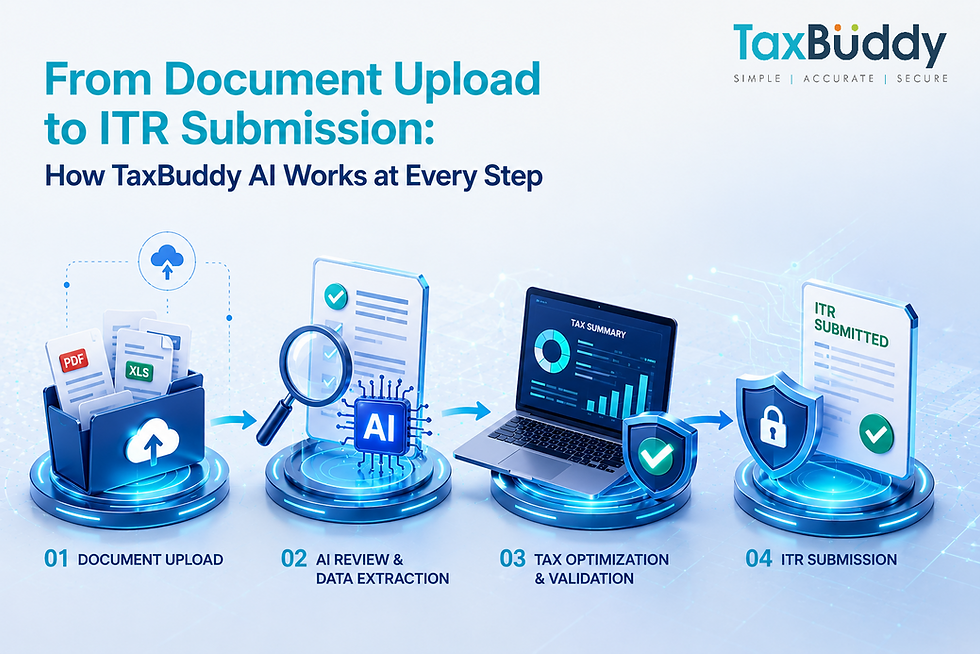
Scrutiny risk can be reduced through proactive reconciliation. Reviewing AIS and TIS before filing, ensuring bank PAN and Aadhaar details are accurate, aligning employer salary data, and correctly classifying income sources are critical steps. Clear reporting of high-value transactions and avoiding unsupported deductions further minimizes risk. Platforms like TaxBuddy assist by auto-fetching data, flagging inconsistencies, and guiding corrective action before submission.
What to Do If Scrutiny Notice Is Received Despite Correct Filing
Receiving a scrutiny notice after filing a return that appears correct can be unsettling, but it is important to approach the situation calmly and methodically. A scrutiny notice is primarily a request for information or clarification, not an accusation of tax evasion or misreporting.
The first and most critical step is to carefully read the notice to identify the exact section under which it has been issued and the specific issue being questioned. Scrutiny notices usually focus on defined areas such as income mismatch, high-value transactions, deduction claims, or unexplained deposits. Understanding whether the case is limited scrutiny or complete scrutiny helps determine the scope of information required and avoids unnecessary disclosures.
Once the issue is identified, all relevant documents should be gathered and reviewed before responding. This may include bank statements, salary slips, Form 16, Form 26AS, AIS, investment proofs, loan agreements, capital gain workings, or business records. Documents should directly address the query raised in the notice rather than providing excessive or unrelated information, as over-disclosure can sometimes lead to additional questions.
Responses must be accurate, consistent, and supported by documentary evidence. If the notice relates to a mismatch in AIS or bank-reported data, it is advisable to reconcile figures and provide a clear explanation for the difference, such as timing differences, clerical errors by reporting entities, or income already offered to tax under a different head. Explanations should be factual and concise, avoiding assumptions or defensive language.
Timely submission is equally important. Scrutiny proceedings operate under strict timelines, and delays in response can result in adverse inferences, best judgment assessments, or penalties. If additional time is genuinely required to compile records, a request for extension should be submitted within the portal rather than allowing deadlines to lapse.
In many cases, scrutiny is resolved at the initial stage itself once the tax officer is satisfied with the explanation and documents provided. However, procedural errors such as incorrect uploads, mismatched figures in replies, or failure to respond to follow-up queries can unnecessarily prolong the assessment. Structured assistance and guided workflows help ensure that responses are properly formatted, relevant, and compliant with portal requirements.
Platforms like TaxBuddy support taxpayers through this process by organizing notice responses, aligning explanations with reported data, and tracking submission timelines. Such structured support reduces the risk of technical mistakes and helps close scrutiny proceedings efficiently without escalation or litigation.
Conclusion
Scrutiny after correct ITR filing has become a data-driven outcome rather than an exception. With multiple reporting channels feeding into tax systems, consistency matters as much as accuracy. Reviewing third-party data, maintaining updated bank records, and using platforms that identify mismatches early can significantly reduce compliance stress. For anyone looking for assistance in tax filing and post-filing compliance, downloading the TaxBuddy mobile app offers a simplified, secure, and hassle-free experience.
FAQs
Q1. Does TaxBuddy offer both self-filing and expert-assisted plans for ITR filing, or only expert-assisted options?
TaxBuddy offers both self-filing and expert-assisted ITR filing options. The self-filing plan is designed for taxpayers who are confident about their income reporting and want system-guided checks such as AIS reconciliation and error alerts. The expert-assisted plan is suitable for taxpayers with complex income, high-value transactions, past mismatches, or scrutiny notices, where professional review and representation reduce compliance risks.
Q2. Which is the best site to file ITR?
The best site to file ITR is one that goes beyond basic return submission and focuses on data reconciliation, accuracy, and post-filing support. Since scrutiny is increasingly driven by AIS, bank data, and third-party reporting, platforms that validate income against these sources and flag mismatches before filing offer a safer filing experience than portals that only accept inputs.
Q3. Where to file an income tax return?
Income tax returns can be filed on the official Income Tax Department e-filing portal or through authorized tax filing platforms. While the government portal enables direct filing, assisted platforms help taxpayers review AIS data, classify income correctly, and handle corrections or notices that may arise after filing.
Q4. Why does scrutiny happen even when tax is fully paid?
Scrutiny is not based on whether tax has been paid but on whether income has been reported correctly and consistently across all data sources. Even when tax liability is fully discharged, mismatches in AIS, unexplained transactions, incorrect income classification, or discrepancies with bank and employer data can lead to scrutiny notices.
Q5. Can a revised return stop scrutiny proceedings?
A revised return can resolve certain mismatches if filed before the scrutiny process formally begins. However, once a case is selected for compulsory scrutiny or a notice under Section 143(2) is issued, filing a revised return alone may not stop proceedings. In such cases, explanations and documentation are required.
Q6. Are salaried employees also commonly selected for scrutiny?
Yes, salaried employees are frequently selected for scrutiny. Common triggers include incorrect HRA claims, a mismatch between Form 16 and AIS, unreported interest income, incorrect regime selection, or claiming deductions not reflected in employer records. Salaried income does not automatically reduce scrutiny risk.
Q7. Do high refunds increase scrutiny risk?
High refund claims often attract verification, especially when refunds arise due to excess TDS, advance tax, or large deductions. The tax department may scrutinise whether the refund claimed aligns with income disclosures and third-party reports before releasing the amount.
Q8. How long does scrutiny usually last?
The duration of scrutiny varies based on the nature of the case. Limited scrutiny cases focusing on specific issues may conclude within a few months, while complete scrutiny involving multiple income heads or explanations can extend longer. Timely and accurate responses generally help close cases faster.
Q9. Is scrutiny always a full assessment?
No, scrutiny is not always a full assessment. Many cases are selected for limited scrutiny, where the tax department examines only specific issues such as cash deposits, deductions, or income mismatches. Full scrutiny is reserved for higher-risk cases or those mandated by CBDT guidelines.
Q10. Can bank errors alone cause scrutiny?
Yes, bank-related errors are a common cause of scrutiny. Incorrect PAN details, Aadhaar linkage issues, or outdated KYC information can result in interest income or transactions being incorrectly reported in AIS, triggering notices even when the taxpayer has not earned additional income.
11Q. Does choosing the new tax regime avoid scrutiny?
Choosing the new tax regime does not reduce scrutiny risk. The tax department evaluates accuracy and data consistency, not the regime selected. Errors such as unreported income, incorrect regime claims, or bank mismatches can trigger scrutiny under both the old and new tax regimes.
Q12. Can professional assistance help reduce penalties during scrutiny?
Professional assistance significantly helps during scrutiny by ensuring correct interpretation of notices, structured responses, and proper documentation. Timely and accurate submissions reduce the likelihood of adverse orders, penalties, or prolonged assessments.




Comments